
Know what is happening on your floor, without chasing anyone.
You want a factory that runs without you. Instead your day goes on calls about short orders and missing scrap. With Prodman, operators log work in two scans at the machine, so you see the truth live.
Sound familiar?
Does your factory run on plans, or on panic?
- A customer calls at 7 pm. The order is 90 pieces short. It is the first you hear of the scrap.
- You started 1,100 units to cover damage. A rush job came in and the first batch sat forgotten in a corner.
- Printed sheets wait 18 hours at folding while the binding line sits idle.
- An artwork change comes on WhatsApp, never reaches the floor, and hundreds of sheets go to waste.
- A press stops mid-run because the paper ran out. You buy more at retail price.
- A die or plate is made again because nobody knew the old one was in the rack.
- To find where a job is, your manager walks the floor and gets three different answers.
- Every department keeps its own sheet. The only place it all comes together is your head.
Your team is not careless. The software was too hard to use at the machine, so the data never got recorded.
Why we built it
Why Prodman exists: software the floor will actually use.
Amit Jindal spent 20 years building software for Humana, KFC and IKEA. Then he met a printer who had tried eight systems in ten years. Each failed because operators had to type like clerks. So we built Prodman on that floor, easy at the machine first.


How it works
Three changes that put you back in control.
One record for every order
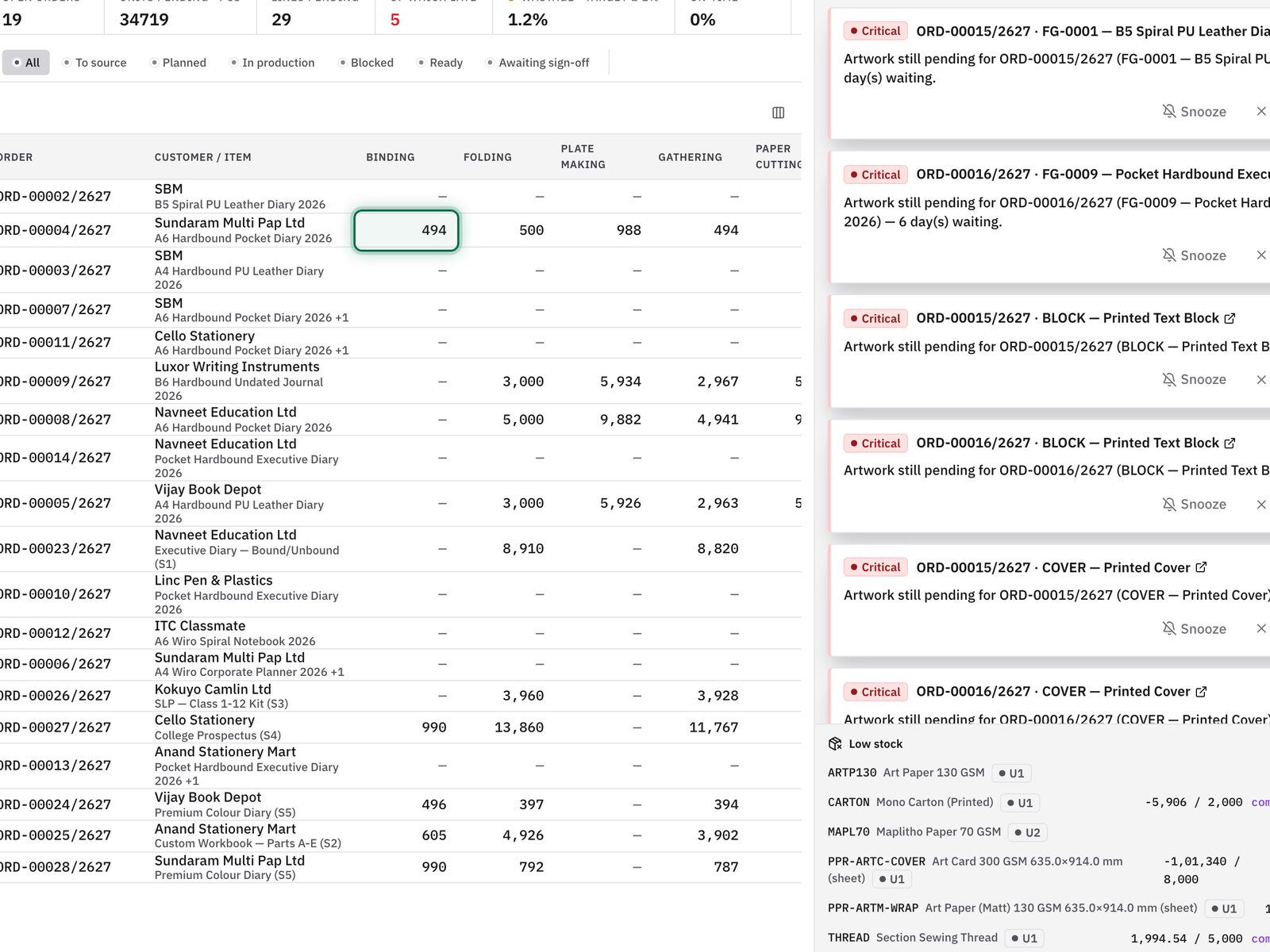
Phone, WhatsApp or PO, every order gets one record from quote to dispatch. Quantities, stages, artwork and material live in one place, not in your head.
Why it works
Why factory software kept failing, and why this works.
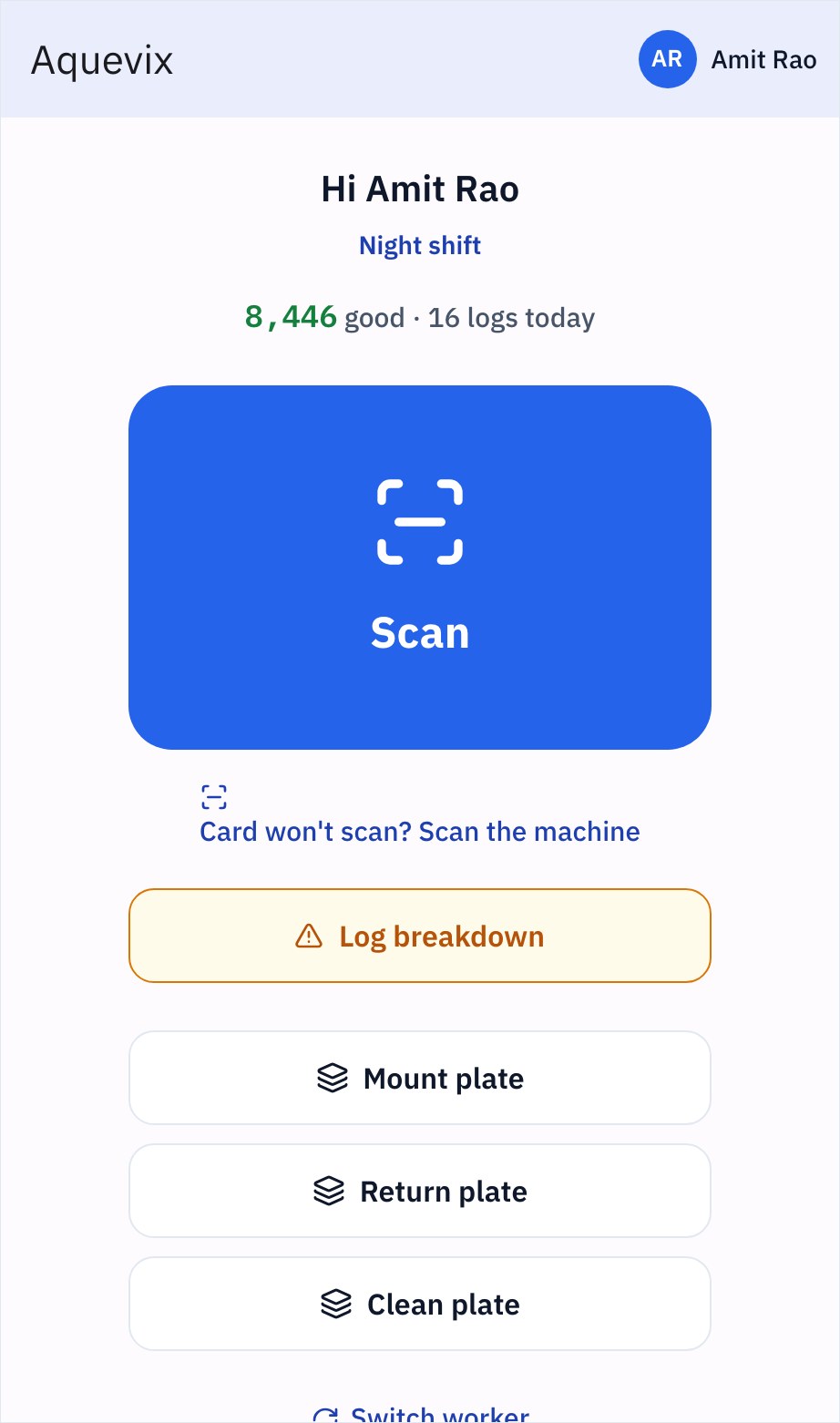
Old systems were built for clerks and made operators type next to running machines. Prodman needs three touches: scan the job, scan the machine, enter the counts. Operators use it from day one.
3touches
scan, scan, key count
2numbers
good and scrap
0typing
nothing to read
- 1Scan the jobWO-2526-0417
- 2Scan the machineKOMORI-4
- 3Good1,040Scrap12
For the owner
Run the whole plant without shouting over the machines.
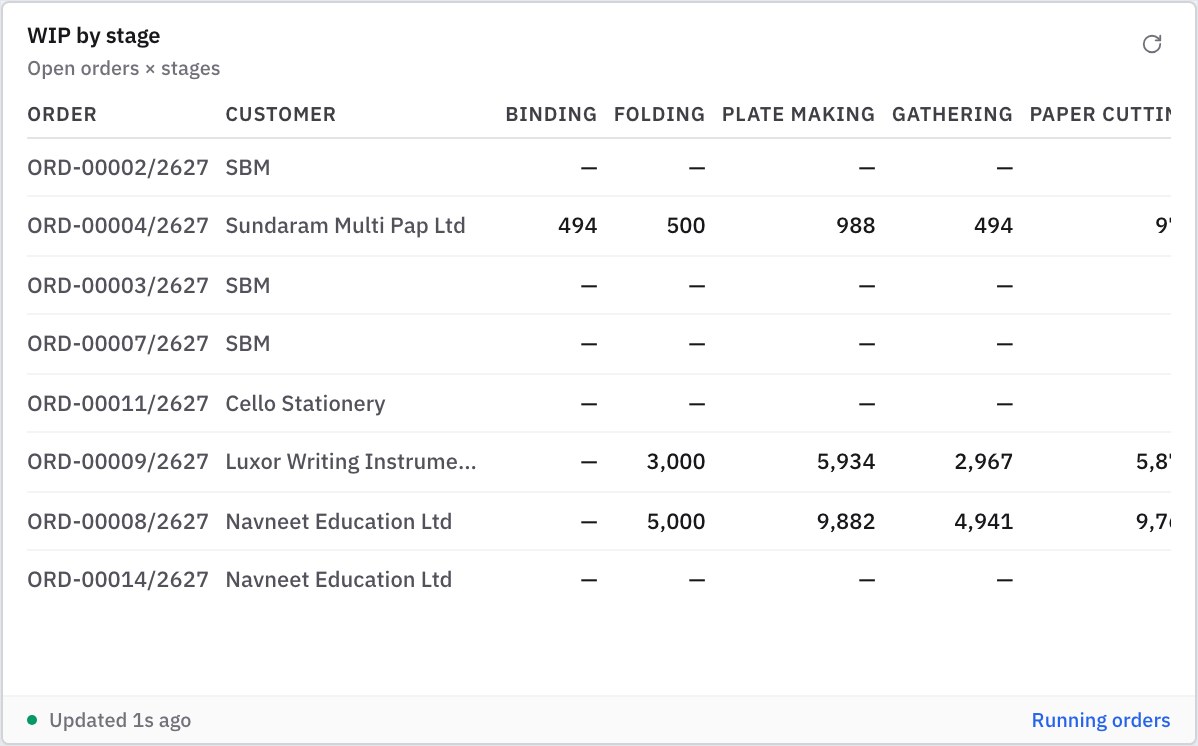
See every order, its stage and how much is done. Know which job is late, short of material or stuck at a vendor. Problems reach you before they become crises.
The cost of free
Free spreadsheets are the most expensive tool in your factory.
Excel and Google Sheets cost nothing upfront. The real bill comes every month, in scrap, rework and lost customer trust.
What spreadsheets invoice you
Looks free. Hides the leaks.
What they really cost you
- Scrap nobody measures, at every stage
- Short shipments your customer finds first
- Machines idle while earlier stages hunt for material
- Dies and plates made twice because the old ones are lost
- Four hours a day walking the floor asking for updates
- Big orders turned down because you can't promise a date
Your neighbour is the wrong benchmark.
When every factory nearby runs on memory and phone calls, chaos feels normal. The factories winning export orders don't work harder. They just measure earlier.
See the real cost of free softwareThe cost of not knowing
Every blind spot ends up costing cash.
Scrap found when the customer opens a short crate. Runs that slip because nobody checked output. This is not normal. It is what happens when you run a factory through the rear-view mirror.
Catch delays, scrap and delivery risks while you can still fix them.
Automatic follow-up
Hand follow-ups to an AI assistant. Name it. Rest easy.
An AI Employee chases one thing for you: a pending artwork approval, a stalled machine or paper running low. Six chases come ready. All start switched off, message only your own staff in shift hours, and never contact customers or suppliers.
Sharma Diaries · hardcover block
1.8 days left at current use
WO-2526-0391 · casing-in line
Everything in one place
Replace a patchwork of tools with one connected system.
23 modules that work as one. Start where it hurts most. Every module runs on the same simple capture at the machine.
Built for your trade
The software adapts to your trade, not the other way around.
Book and diary printing is live today. Upholstery and furniture run on the same engine, with their own stages and export papers.
They built their software in an office.
We built this on a factory floor.
Built on the floor
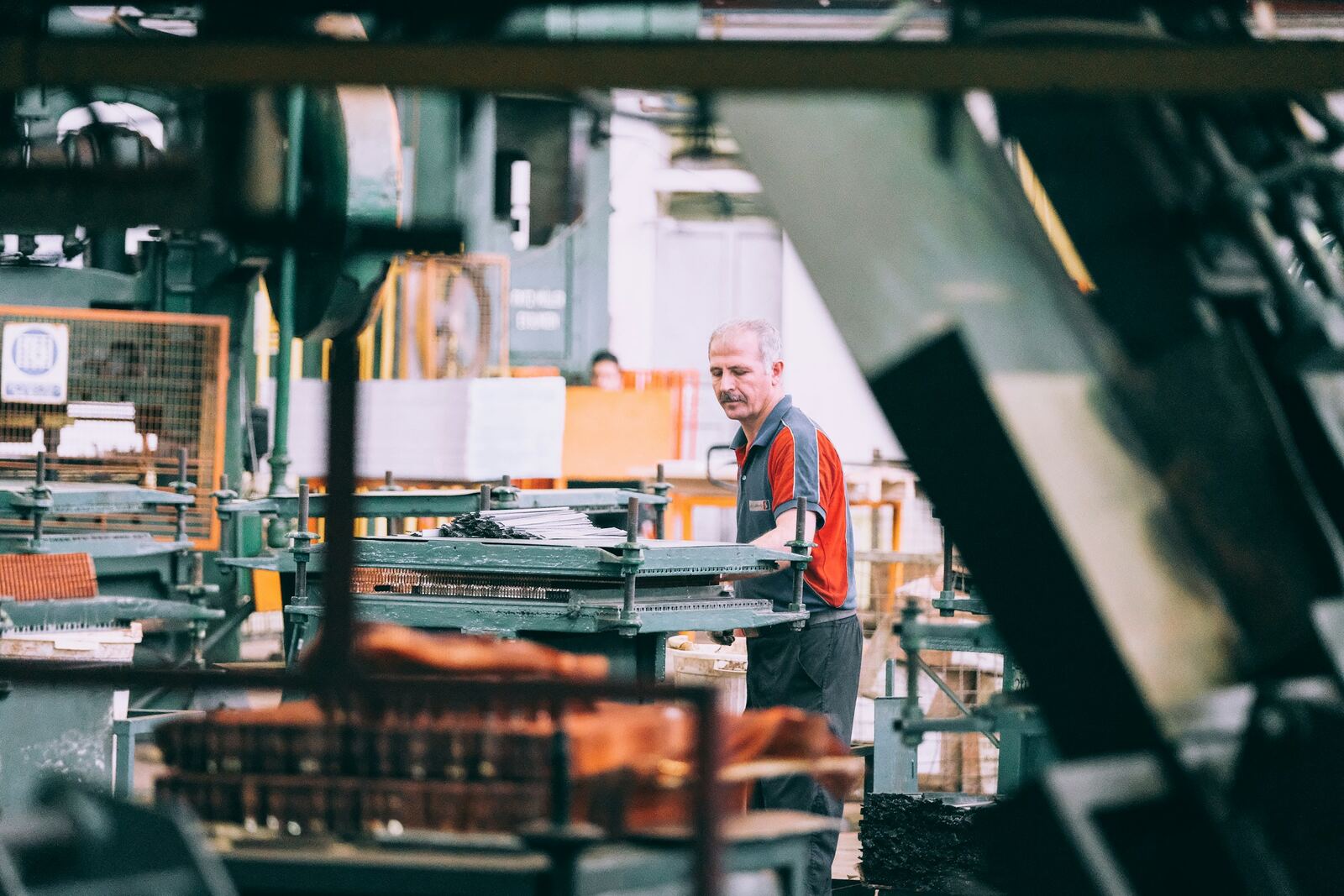
Built where the problems happen, backed by 20 years of engineering.
A book and diary printer came to us after eight failed systems. We built Prodman on their floor, against live orders and real deadlines. Behind it is Aquevix, building software for Humana, KFC, DaVita and IKEA since 2006.


Straight answers
Questions every owner asks.
Will our floor workers actually use it?
Yes. Logging takes under five seconds: scan the job, scan the machine, enter good and scrap counts. Nothing to read or type, so operators use it from day one.
We already have an ERP or accounting software. Do we replace it?
No. Prodman records what happens at the machines and works alongside the accounts software you already use.
How does setup work? Will it disrupt production?
We come to your plant, set up your data and train your team on the floor. We take only a few factories each quarter so we can do it properly.
Is this another expensive, open-ended contract?
No. No custom coding traps, no endless consultants. We look at your workflow in a 30-minute call and give you clear terms upfront.
How soon will we see results?
Floor capture usually starts within days of importing your data. You see machine load, scrap and order stages almost at once.
You should not need to spend your life walking the floor to discover the truth.
Bring us one problematic production order, one chronic bottleneck, or one metric nobody trusts. In thirty minutes, we will show you how Prodman restores order and calm, without asking your machine operators to become clerical typists.
Limited on-site implementations each quarter · Configured by hand